
Table of Contents
A smart thermostat and a programmable thermostat both help control your home’s temperature, but they work in different ways. Smart thermostats connect to the internet and learn your habits, letting you control them from your phone. Programmable thermostats follow schedules you set but don’t connect to the internet.
Smart thermostats are more expensive but can save more energy, while programmable thermostats cost less but require manual programming. Your choice depends on your budget, how tech-savvy you are, and how much control you want over your home’s heating and cooling.
What Are Smart Thermostats?
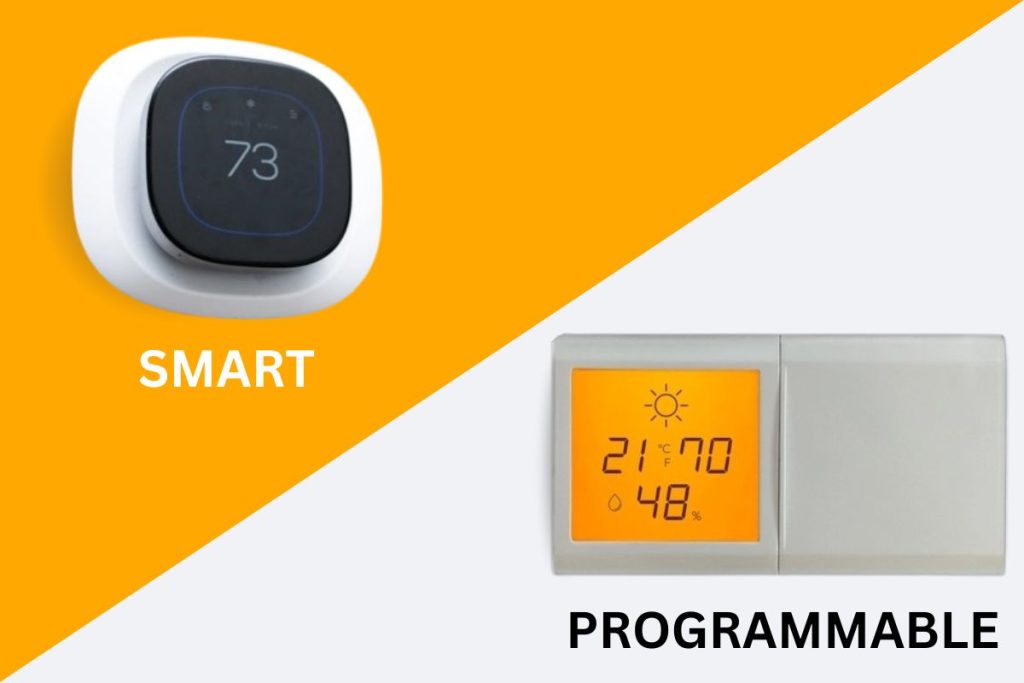
Smart thermostats are the newest type of temperature control devices for your home. They connect to your home’s Wi-Fi network, allowing you to control your heating and cooling system from anywhere using a smartphone app. This means you can adjust your home’s temperature even when you’re not there.
One of the coolest things about smart thermostats is that they can learn your schedule and preferences over time. For example, if you usually turn the heat down at night, the smart thermostat will start doing this automatically. Some models can even detect when no one is home and adjust the temperature to save energy.
Many smart thermostats work with voice assistants like Amazon Alexa or Google Home. You can simply say, “Hey Google, set the temperature to 72 degrees,” and your thermostat will respond. Smart thermostats also provide detailed energy reports that show you how much energy you’re using and suggest ways to save more.
Popular Smart Thermostat Features
- Remote control through smartphone apps
- Learning capabilities that adjust to your habits
- Geofencing that knows when you’re coming home
- Energy usage reports to help you save money
- Voice control with popular smart home systems
- Maintenance alerts for your HVAC system
Smart thermostats often have colorful, easy-to-read displays that show the current temperature, weather forecasts, and other helpful information. Some models can even monitor humidity levels in your home or alert you when it’s time to change your air filter.

What Are Programmable Thermostats?
Programmable thermostats have been around longer than smart thermostats. They let you set temperature schedules for different times of the day and different days of the week. This means you can program your thermostat to automatically lower the heat when you’re at work and raise it before you come home.
Most programmable thermostats offer several programming periods per day. For example, you might set one temperature for morning, another for daytime when everyone is away, another for evening, and a fourth for overnight. This helps you save energy without having to remember to adjust the thermostat manually.
Unlike smart thermostats, programmable thermostats don’t connect to the internet or learn your habits. You need to set up the schedules yourself, and if your routine changes, you’ll need to update the programming manually. They typically have simple displays with buttons or touch controls for adjusting settings.
Common Programmable Thermostat Types
- 7-day models – Different schedules for each day of the week
- 5-2 models – One schedule for weekdays, another for weekends
- 5-1-1 models – One schedule for weekdays, separate schedules for Saturday and Sunday
- 1-week models – Same schedule for every day
Programmable thermostats are generally less expensive than smart thermostats, making them a good choice if you’re on a budget. They still offer energy savings compared to basic manual thermostats, as long as you take the time to program them correctly.
Key Differences Between Smart and Programmable Thermostats
The main difference between smart and programmable thermostats is connectivity. Smart thermostats connect to the internet and can be controlled remotely, while programmable thermostats operate independently. This connectivity gives smart thermostats many advantages but also makes them more complex.
Another big difference is learning ability. Smart thermostats can learn from your behaviors and adjust automatically. If you regularly turn the temperature down at 10 PM, a smart thermostat will start doing this for you. Programmable thermostats only follow the exact schedules you set and don’t adapt to changes in your routine.
Installation requirements also differ between the two types. Smart thermostats usually need a C-wire (common wire) for power, which some older homes don’t have. Programmable thermostats typically don’t need this special wiring, making them easier to install in some situations.
Comparison Chart: Smart vs Programmable Thermostats
| Feature | Smart Thermostat | Programmable Thermostat |
|---|---|---|
| Remote Control | Yes (via app) | No |
| Learning Capability | Yes | No |
| Internet Connection | Required | Not needed |
| Price Range | $100-$300 | $20-$100 |
| Energy Reports | Detailed | Limited or none |
| Voice Control | Yes | No |
| Ease of Use | Very easy | Moderate |
User interface is another important difference. Smart thermostats typically have colorful touchscreens with intuitive controls, while programmable thermostats often have more basic displays with physical buttons. This can make smart thermostats easier to use for many people, especially those who aren’t tech-savvy.
Cost Comparison: Smart vs Programmable Thermostats
When it comes to upfront costs, programmable thermostats are the clear winner. You can find basic programmable thermostats for as little as $20, with more advanced models costing around $100. Smart thermostats, on the other hand, typically start around $100 and can cost up to $300 for premium models with all the bells and whistles.
Installation costs can also differ. If you’re comfortable with basic wiring, you might be able to install either type yourself. However, smart thermostats sometimes require professional installation, especially if your home doesn’t have the necessary C-wire. Professional installation typically costs between $100 and $200.
The long-term cost picture is where things get interesting. While smart thermostats cost more upfront, they often save more money over time through greater energy efficiency. Many smart thermostat manufacturers claim their devices can save 10-15% on heating and cooling costs, compared to 10% for properly programmed programmable thermostats.
Potential Savings Over Time
Let’s look at a simple example. If your monthly heating and cooling costs are $200:
- A programmable thermostat might save you $20 per month (10%)
- A smart thermostat might save you $30 per month (15%)
Over a year, that’s a difference of $120 in additional savings with a smart thermostat. This means a $200 smart thermostat could pay for itself in less than two years compared to a basic programmable model. However, actual savings depend on your usage patterns, climate, and how efficiently your home is insulated.
Many utility companies offer rebates for installing smart thermostats, which can significantly reduce the upfront cost difference. Some rebates can be as high as $100, making smart thermostats much more affordable. Check with your local utility company to see what incentives are available in your area.
Energy Savings: Which Type Saves More?
Smart thermostats generally save more energy than programmable thermostats, but the difference might not be huge if you’re diligent about programming. The key advantage of smart thermostats is that they optimize your energy use automatically, while programmable thermostats require you to set up efficient schedules yourself.
Studies show that many people don’t program their programmable thermostats correctly—or at all. In fact, the EPA temporarily suspended the ENERGY STAR certification for programmable thermostats because research showed many weren’t being used effectively. Smart thermostats help solve this problem by making energy-saving adjustments automatically.
The learning features of smart thermostats can identify additional savings opportunities you might miss. For example, they can detect when no one is home unexpectedly and adjust accordingly, or they can make tiny temperature adjustments based on outside weather that you wouldn’t bother with manually.
Ways Smart Thermostats Maximize Energy Savings
- Geofencing – Uses your phone’s location to know when you’re away
- Weather adaptation – Adjusts based on outside temperature and humidity
- Learning algorithms – Finds patterns in your behavior to optimize comfort and savings
- Usage reports – Shows where you’re using energy and suggests improvements
- Maintenance reminders – Ensures your HVAC system runs efficiently
For homes with irregular schedules, smart thermostats offer significant advantages. If your daily routine varies or you travel frequently, a smart thermostat can adapt much better than a programmable one with fixed schedules. The remote control feature also lets you adjust settings if plans change unexpectedly.

Making the Right Choice for Your Home
Choosing between a smart and programmable thermostat depends on several factors. If you’re comfortable with technology and want maximum convenience and energy savings, a smart thermostat is probably worth the extra cost. If you’re on a tight budget and have a regular schedule, a programmable thermostat might be sufficient.
Consider your daily routine when making your decision. If your schedule is very consistent, a programmable thermostat that you set once and forget might work perfectly. If your schedule varies or you want the ability to control your home’s temperature remotely, a smart thermostat offers valuable flexibility.
Your existing HVAC system also matters. Most smart thermostats work with conventional forced-air systems, but compatibility with heat pumps, multi-stage systems, or radiant heating can vary. Check the thermostat manufacturer’s compatibility tools before making a purchase to ensure it will work with your system.
Who Should Choose a Smart Thermostat?
- Tech-savvy homeowners who enjoy smart home features
- People with irregular schedules or who travel frequently
- Those who want to maximize energy savings
- Homeowners who qualify for utility rebates
- Anyone who wants detailed energy usage data
Who Should Choose a Programmable Thermostat?
- Budget-conscious homeowners
- People with very consistent daily schedules
- Those who prefer simpler technology
- Homes without reliable Wi-Fi
- Situations where C-wire installation would be difficult
Remember that even the best thermostat can only do so much. For maximum energy efficiency, also consider other factors like proper insulation, sealing air leaks, and regular HVAC maintenance. A smart thermostat in a poorly insulated home won’t save as much as you might hope.

Frequently Asked Questions About Smart vs Programmable Thermostats
Do smart thermostats really save more money than programmable ones?
Yes, smart thermostats typically save more money than programmable thermostats. While programmable thermostats can save around 10% on heating and cooling costs when used correctly, smart thermostats can save 10-15% or more. This is because they optimize your energy use automatically and can make adjustments based on factors like whether you’re home, local weather conditions, and your specific usage patterns.
Are smart thermostats difficult to install?
Most smart thermostats are designed for DIY installation and come with detailed instructions. The process typically takes 30-60 minutes. However, some homes (especially older ones) may not have the required C-wire that many smart thermostats need for power. In these cases, you might need professional installation or a smart thermostat model that doesn’t require a C-wire.
Can I control a programmable thermostat remotely?
Standard programmable thermostats cannot be controlled remotely as they don’t connect to the internet. They only follow the schedules you program directly on the device. If remote control is important to you, you’ll need a smart thermostat with an app or a Wi-Fi programmable thermostat, which is a hybrid option that offers basic remote control without all the learning features of a true smart thermostat.
What happens if my internet goes down with a smart thermostat?
If your internet connection fails, your smart thermostat will continue to operate based on its last programmed schedule. You won’t be able to control it remotely or use features that require internet connectivity until your connection is restored, but your home will still maintain temperature control. The thermostat itself doesn’t rely on the internet to operate your heating and cooling system.
Are smart thermostats compatible with all HVAC systems?
Most smart thermostats work with conventional forced-air heating and cooling systems, but compatibility with other systems varies. Before purchasing, check the manufacturer’s compatibility tool for your specific HVAC setup. Some systems that might require special consideration include heat pumps, multi-stage systems, radiant heating, and systems without central air conditioning.
How long do smart and programmable thermostats last?
Both smart and programmable thermostats typically last 10-15 years. Programmable thermostats might last slightly longer since they have fewer electronic components that could fail. However, smart thermostat technology advances quickly, so you might want to upgrade sooner to take advantage of new features, even if your current device is still working.
Ready to upgrade your home’s temperature control system?
Whether you choose a smart thermostat for maximum convenience and savings or a programmable thermostat for its simplicity and lower cost, you’ll be taking a step toward greater comfort and efficiency. Contact Method Air today to discuss which option is best for your specific home and needs, and start enjoying better control over your indoor climate and energy bills.